Fintech App Development

MIT Project delivers end-to-end fintech app development services, specializing in secure, scalable, and compliant digital solutions. With our services, expect faster go-to-market times, compliance alignment, and a tailored approach that meets your business requirements.

Start Building
New Stunning apps

Let’s Get to Work

Whatever technology your vision requires, we can apply it efficiently

Artificial Intelligence

These are leveraged for predictive analytics, risk assessment, personalization, and automation of various financial processes.

Cloud Computing

Used for scalable, flexible, and cost-effective data storage and processing solutions.

Cybersecurity

Incorporates advanced encryption, biometrics, and multi-factor authentication for secure data protection.

Internet of Things (IoT)

Utilized for creating innovative solutions in insurance tech, payments, and more.

Natural Language Processing (NLP)

Used in chatbots and voice assistants for better customer interaction.

Blockchain

For secure transactions, smart contracts, and decentralized finance (DeFi) applications.

Big Data

Enables processing and analysis of large datasets for real-time insights and decision making.

APIs and Microservices

Used to integrate various services, and create modular, scalable, and flexible applications.

Quantum Computing

Though still in its early stages, quantum computing holds potential for handling complex computations and encryption processes, especially relevant in areas like portfolio optimization and fraud detection.

Robotic Process Automation (RPA)

Deployed for automating repetitive and manual financial processes.

Our Technology Stack

Vue.js

React.js

Nuxt.js

Flutter Web

PWA

Python

MongoDB

AmazonMQ

Kafka

Firebase

Microservices

Grafana

Sentry

PostgreSQL

Celery

Celery

Flutter

Kotlin

Swift

React Native

Amazon AWS

Digital Ocean

Docker

Kubernetes

Bash

Google Cloud

GitHub Actions

GitLab

Selenium

Terraform

Healthcare App development process

Market Research

Our process begins with comprehensive market research. We delve into the financial industry trends, competitor strategies, user preferences, and regulatory compliance requirements to ensure we build an app that’s future-ready and competitive.

UX/UI Design

Based on insights from market research, our design team works on the User Experience (UX) and User Interface (UI) design. We focus on intuitive navigation, sleek aesthetics, and interactive elements to ensure your app is easy to use and visually engaging.

Prototyping

Before jumping into full-fledged development, we create interactive prototypes. This allows us to simulate user flow, experiment with design elements, and gather early feedback. It ensures that we are on the right path and helps to avoid costly changes down the line.

Agile Development

Post-prototyping, our skilled developers leverage an agile methodology for the development process. This involves iterative development cycles, continuous integration, and regular feedback, ensuring the app is developed efficiently and effectively. The core technologies we utilize include AI, blockchain, cloud computing, and cybersecurity tools among others.

QA Testing

Every feature of the app undergoes rigorous Quality Assurance testing. Our QA team checks for functional performance, user experience, security vulnerabilities, and regulatory compliance, ensuring that the final product is flawless.

App Launch & Support

Once we’re certain that the app meets our quality standards, we manage the deployment process on the desired platforms. But our commitment doesn’t stop at launch. We offer continuous support and maintenance, providing regular updates based on user feedback and evolving market trends, ensuring your app always stays ahead of the curve.

Our Cases

CRM & ERP
Fastago

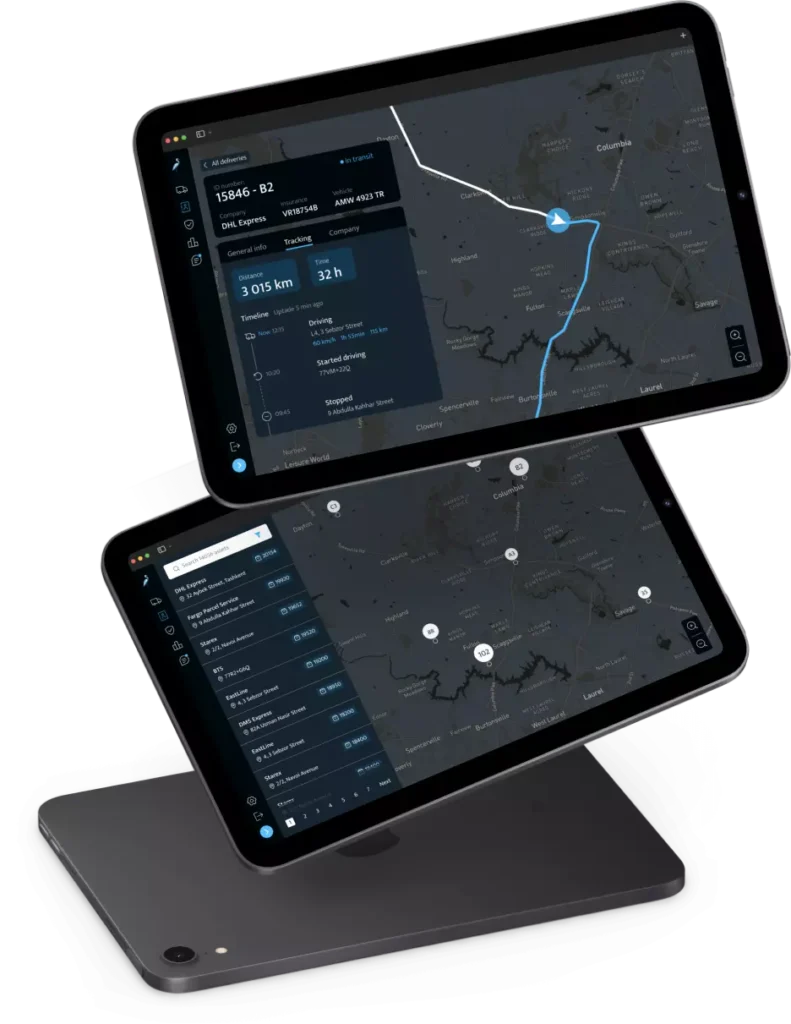
Aggregator for Last-mile

Platform connects consumers with local delivery services, allowing for efficient and timely delivery of goods. It also streamlines the delivery process by providing real-time tracking and status updates and managing payment and customer service.

Healthcare
Hygge

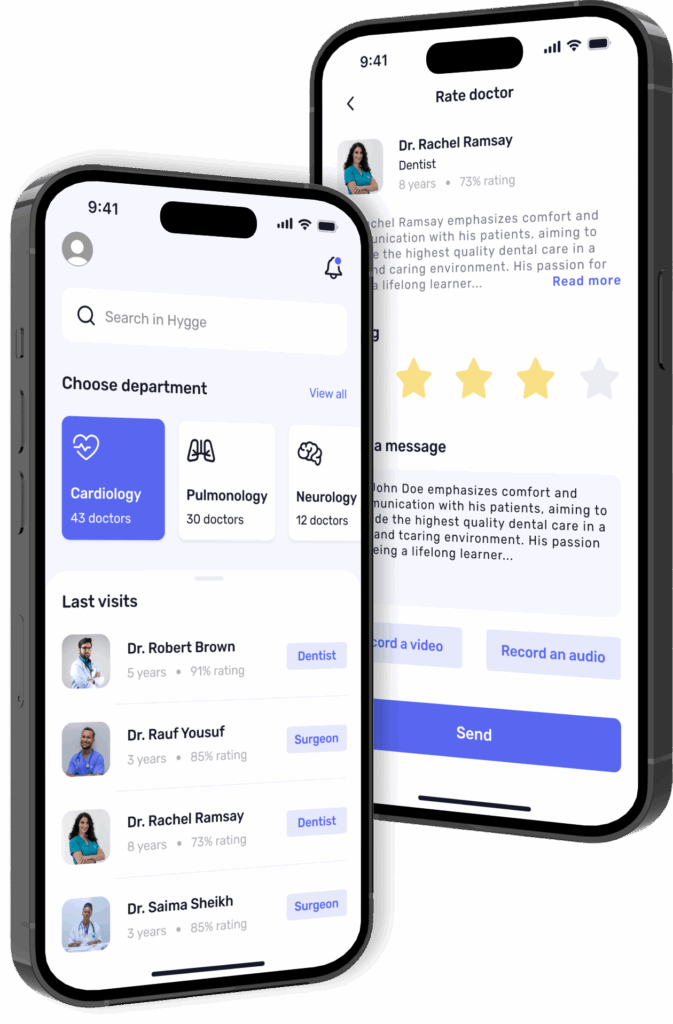
Medical Booking App

Hospital booking app that simplifies scheduling medical appointments and managing healthcare needs. It provides a user-friendly platform to search for healthcare providers, book appointments, and store medical records.

Frequently Asked Questions

To start your own fintech, first define your niche (payments, investments, insurance), then build an MVP to validate the idea and attract initial users. Partnering with a reliable compliance expert is essential, as fintech involves strict financial regulations. For example, Stripe launched successfully by focusing initially only on developer-friendly payment solutions.

Designing a fintech app involves creating a secure, user-friendly interface with clear financial processes and robust data protection. UX should emphasize simplicity and transparency to build user trust. For example, Revolut succeeded largely because of its intuitive app interface and easy-to-understand financial dashboards.

Fintech uses technologies like cloud computing, blockchain, AI, and APIs to provide secure, fast, and scalable financial services. AI is especially crucial for fraud detection, enhancing security by spotting suspicious transactions instantly. For instance, PayPal uses AI and machine learning to reduce fraud losses significantly.

Fintech primarily uses programming languages like Python, Java, JavaScript, and SQL. Python is popular for data analysis, AI, and automation tasks, whereas Java remains trusted for backend security and scalability. Robinhood, for example, heavily uses Python and Go for fast and secure trade execution.


Yes, fintech generally requires coding skills, as developing financial platforms and digital solutions depends heavily on software development and programming. However, startup founders without coding skills can outsource or hire developers to handle technical aspects. For example, Klarna’s founders outsourced initial tech development.

To become a fintech developer, gain proficiency in programming languages such as Python, Java, or JavaScript, and develop strong skills in cybersecurity and financial software standards. Practical experience with financial APIs and compliance is beneficial. For example, developers skilled in Stripe’s API can significantly streamline payment integration.

Fintech stands for “Financial Technology,” referring to innovative digital technologies aimed at improving financial services like banking, payments, insurance, and investments. For instance, PayPal is a classic example of fintech, revolutionizing online payments.

Yes, fintech startups can be highly profitable by solving real-world financial problems, like simplifying payments, investing, or lending. Companies generate revenue through transaction fees, subscriptions, or commissions. For instance, Stripe earned over $14 billion in revenue in 2022 by streamlining online payments.

Fintech and blockchain development combine digital finance solutions with decentralized blockchain technology to enhance transparency, security, and speed of financial transactions. For example, Ripple uses blockchain to facilitate instant, cross-border payments with low fees.

A fintech engineer earns on average between $90,000 and $150,000 annually, depending on experience, location, and specific expertise. Engineers skilled in blockchain or AI can command higher salaries. For example, in major tech hubs, senior blockchain engineers often earn over $180,000 per year.

Yes, fintech is a promising career choice due to rapid industry growth, high demand for tech talent, and attractive salaries. The global fintech market is projected to reach $556 billion by 2030, ensuring numerous job opportunities and career growth prospects.

To grow a fintech startup, focus on customer trust through seamless UX and robust security, leverage strategic partnerships for rapid market entry, and invest in compliance to avoid regulatory hurdles. For example, Wise expanded globally by focusing on transparency in currency conversion fees, earning user trust rapidly.

Secure. Compliant. User-Friendly.